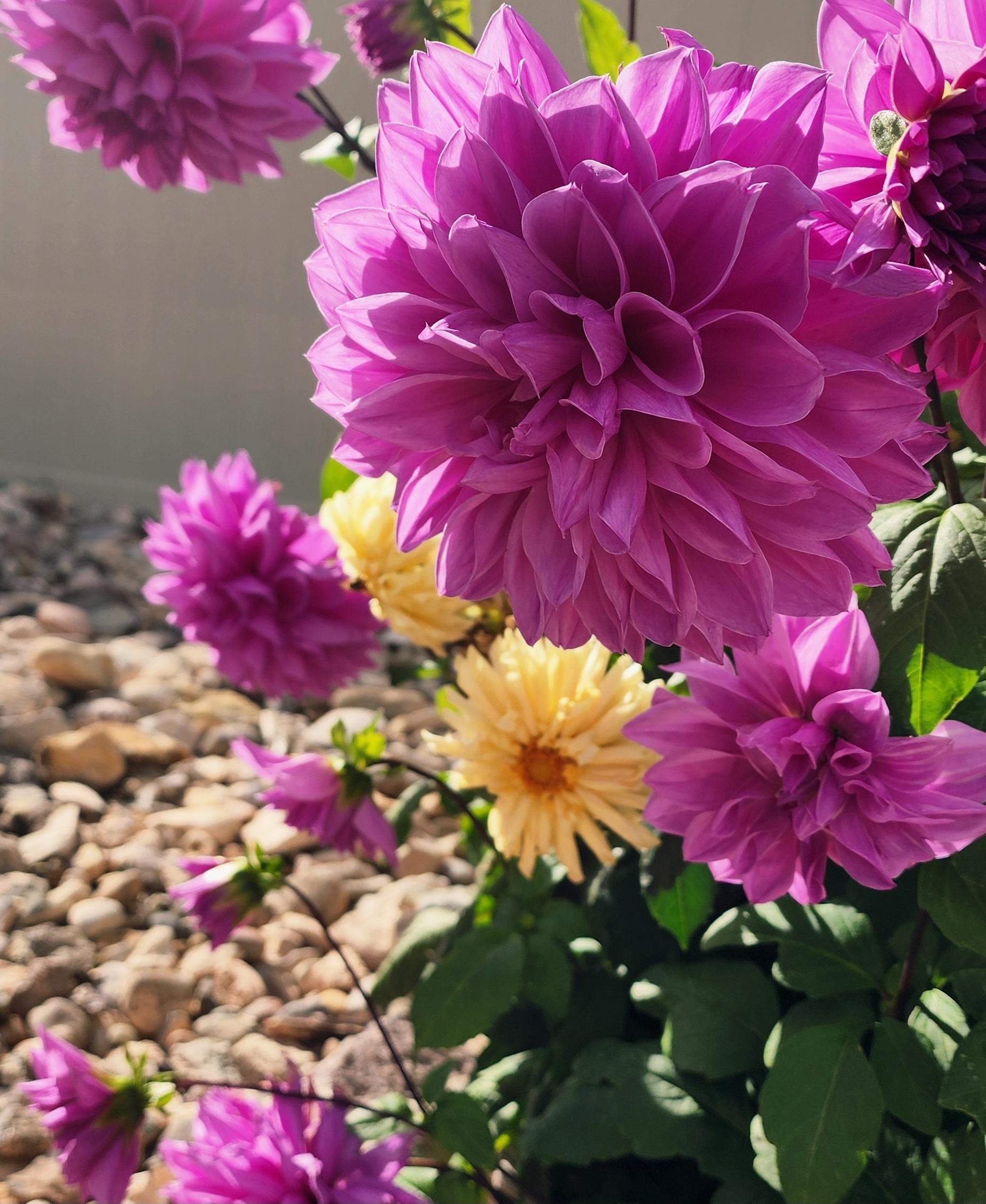
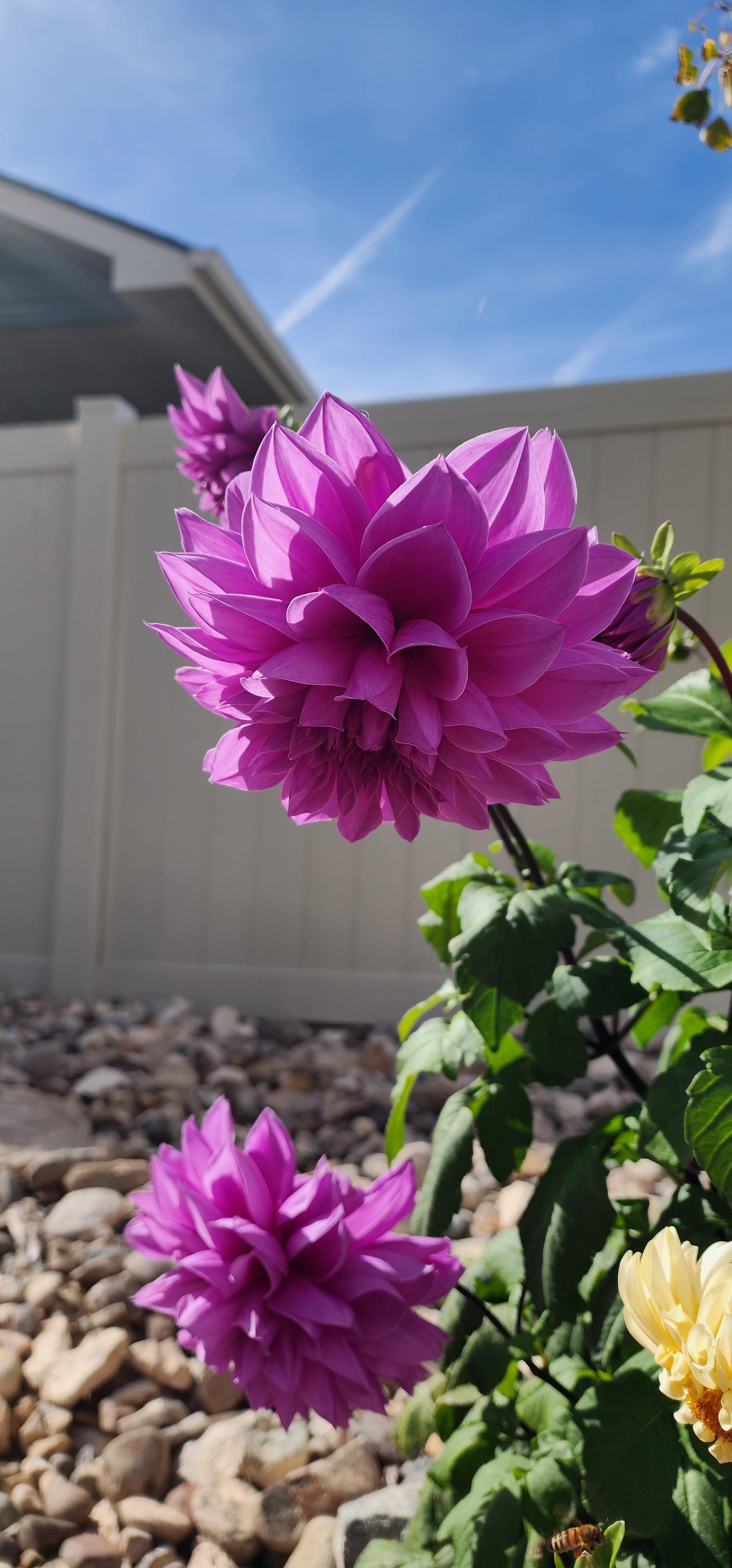
Dahlia planting in bloom, purple and soft yellow

Dahlia

×hybrida

Purple dinnerplate dahlia in full bloom

Few flowers carry a Western Colorado garden into fall the way dahlias do. They open in midsummer and keep coming — bigger and more abundant as the nights cool — right up to the first hard freeze. The dinnerplate types shown here can throw blooms the size of a dinner plate on a single stem, in orchid-purple, lavender-pink, and soft yellow (the genus covers nearly every color but true blue).

They are not winter-hardy at our elevation: the tuber will not survive frozen ground. That is simply how dahlias are grown here — enjoy them all season, then lift and store the tubers over winter and replant in spring, when they come back bigger than the year before.

Two honest notes for anyone considering them: the large-flowered varieties need staking, because a bloom that size on a hollow stem will snap in our wind; and deer will happily eat them. For most gardeners who grow them, the payoff is worth it.

Plant Characteristics
Genus
Dahlia
Species
×hybrida
Family
Asteraceae
Flower Color
Orchid-purple to lavender-pink (dinnerplate); soft yellow also shown. Genus spans all colors but true blue.
Bloom Time
Height
3–4 ft (dinnerplate types)
Width
18–24 in
Water Use
Medium
Care Instructions

Hardiness (Montrose / Delta, ~Zone 5–6): Tender. Dahlias will NOT overwinter in the ground here — tubers must be lifted and stored. Treat as a lift-and-replant perennial.

Site & planting: Full sun (6+ hrs), rich well-drained soil. Plant tubers after the soil warms and frost risk passes (mid–late May locally), 4–6 in deep, eye up. Space dinnerplate types 18–24 in apart. Go easy on water until shoots emerge — wet tubers rot.

Staking (required on the big types): Set the stake AT PLANTING so you don't spear the tuber later. A dinnerplate head on a hollow stem will snap in our wind — tie loosely as it grows.

Pinch & deadhead: Pinch the growing tip above the 3rd–4th leaf pair at ~12 in tall to force branching and more blooms. Deadhead spent flowers to keep it producing — spent buds are rounded/soft, new buds are pointed (don't cut the pointed ones).

Feed & water: Low-nitrogen fertilizer (more bloom, less leaf). Deep, consistent water once established; never soggy.

End of season — the part that matters: After the first hard freeze blackens the foliage, cut stems to ~4–6 in. Dig the clump carefully (start wide — tuber necks break easily). Knock off soil, cure a few days out of direct sun, then store cool, dark, and ABOVE freezing (35–50°F) in peat, vermiculite, or wood shavings. Check once or twice over winter and toss any that rot.

Spring: Divide so each piece has a chunk of crown with at least one eye; replant after frost. They come back bigger.

Deer: NOT deer-resistant — deer readily browse dahlias. Plan fencing/repellent on exposed sites.