In December of 1871 a man named Joseph Lessler in Buffalo, New York patented what the Patent Office recorded as an Improvement in lawn-sprinklers. It was a stand, a nozzle and a length of hose running to the hydrant. The reason he gave for building it is the part worth reading: he wanted a way to water a lawn "without requiring the constant attention of an attendant."
A hundred and fifty years later that is still the whole proposition. Not a greener lawn — a lawn that gets watered on the Tuesday you are in Grand Junction, the week you are on holiday, and the stretch in August when it is a hundred degrees and nobody wants to be standing in the yard holding a hose.
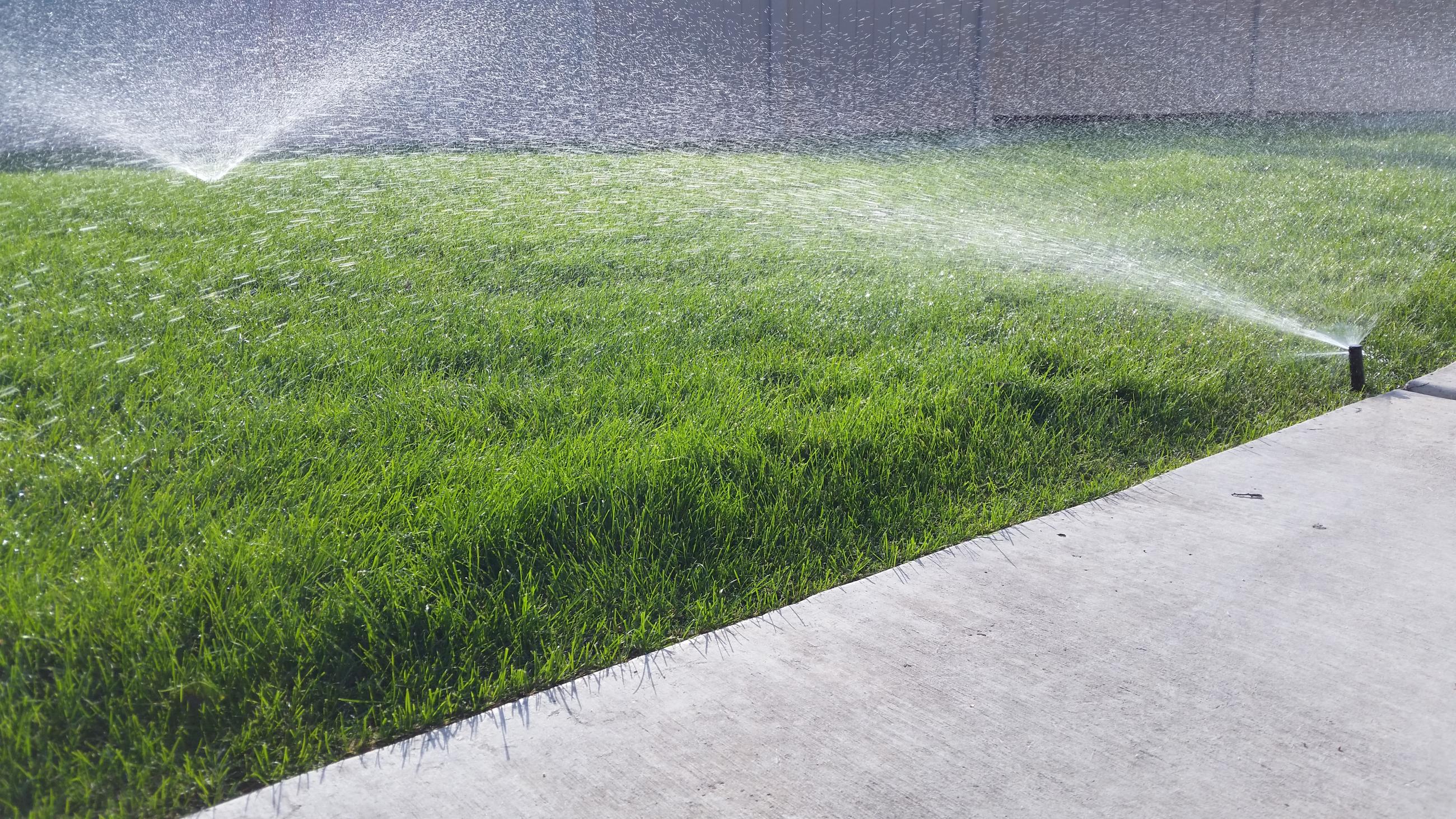
And a system waters better than a person does, which is the part people do not expect. It runs before dawn, when water goes into the soil instead of evaporating off it and when foliage has all morning to dry — which is most of what keeps leaf disease out of a lawn. It runs for a measured number of minutes rather than until somebody remembers to move the hose. And it puts water where the plant uses it: drip at the root of a shrub bed, spray on turf, nothing at all on the walk.
That is also why a properly designed system uses less water than hand watering, not more. A hose runs at whatever it runs at for as long as you forget about it. A zone runs for eleven minutes and shuts off.
Zones are the other half of it. A lawn, a shrub bed, a row of young trees and a vegetable garden want four different amounts of water on four different schedules. One hose gives them all the same thing, which means something on the property is always either drowning or dry. Separating them is the difference between a yard that mostly works and one that works everywhere.
On this ground it is also what makes a real landscape possible at all. High desert, alkaline soil, a hundred and fifty frost-free days and a July that takes water out of the ground faster than anything puts it back — without irrigation the list of things that will live here is short and tough. With it, you can have the yard you actually wanted, and the planting and hardscape you paid for is protected rather than watched.
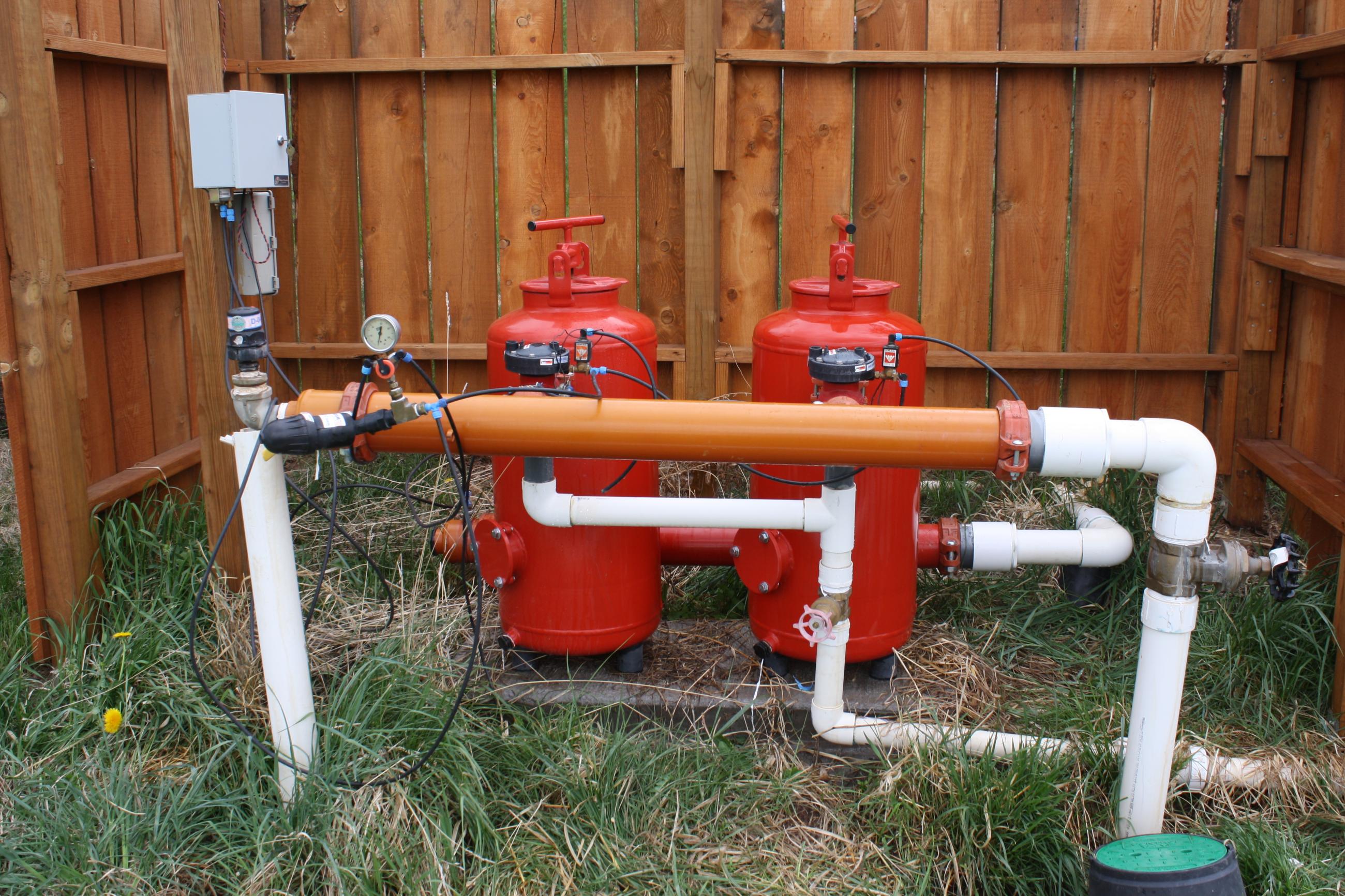
And if your water comes off a ditch, a system is how you use the share you are entitled to. Ditch water arrives on the ditch company's schedule rather than the weather's; a pump, filtration and storage turn an allocation you might otherwise miss into water on the property when the plants need it.
The clicking you hear across a hayfield in July is the other half of the history. Sixty years after Lessler, a citrus grower in Glendora, California named Orton Englehart worked out the impact drive — a spring-loaded arm that knocks the head around in a circle, one click at a time, covering ground no fixed nozzle could reach, and doing it on water pressure instead of a motor. He sold the design to Clem and Mary LaFetra, who put it on the market as Rain Bird. We still specify those heads, and you can still hear his invention from the road.
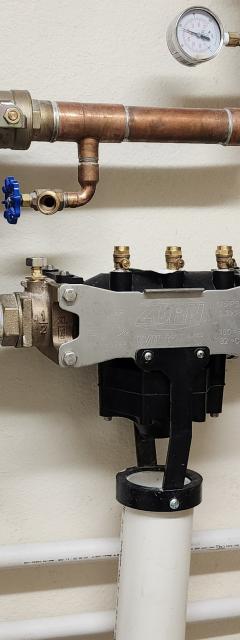
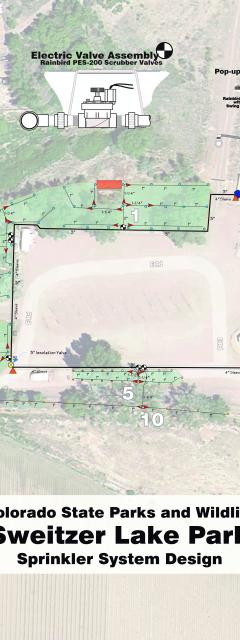
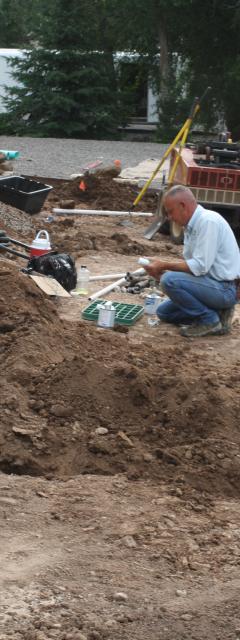
A sprinkler system is something you own for twenty years, so we look after the whole of it. It gets designed before anything is trenched, installed, started up each spring and the backflow assembly tested while the system is charged, checked mid-season when the heat arrives, repaired when a lateral gets cut or a valve sticks, and blown out each fall before the ground freezes. Seven points of contact across the life of a system, all from the same company, working from the plan we drew for your property. The pages below cover each of them.