Cotoneaster

Cotoneaster horizontalis, Cotoneaster dammeri, Cotoneaster lucidus

Cultivars: 'Coral Beauty', 'Tom Thumb', 'Emerald Beauty'
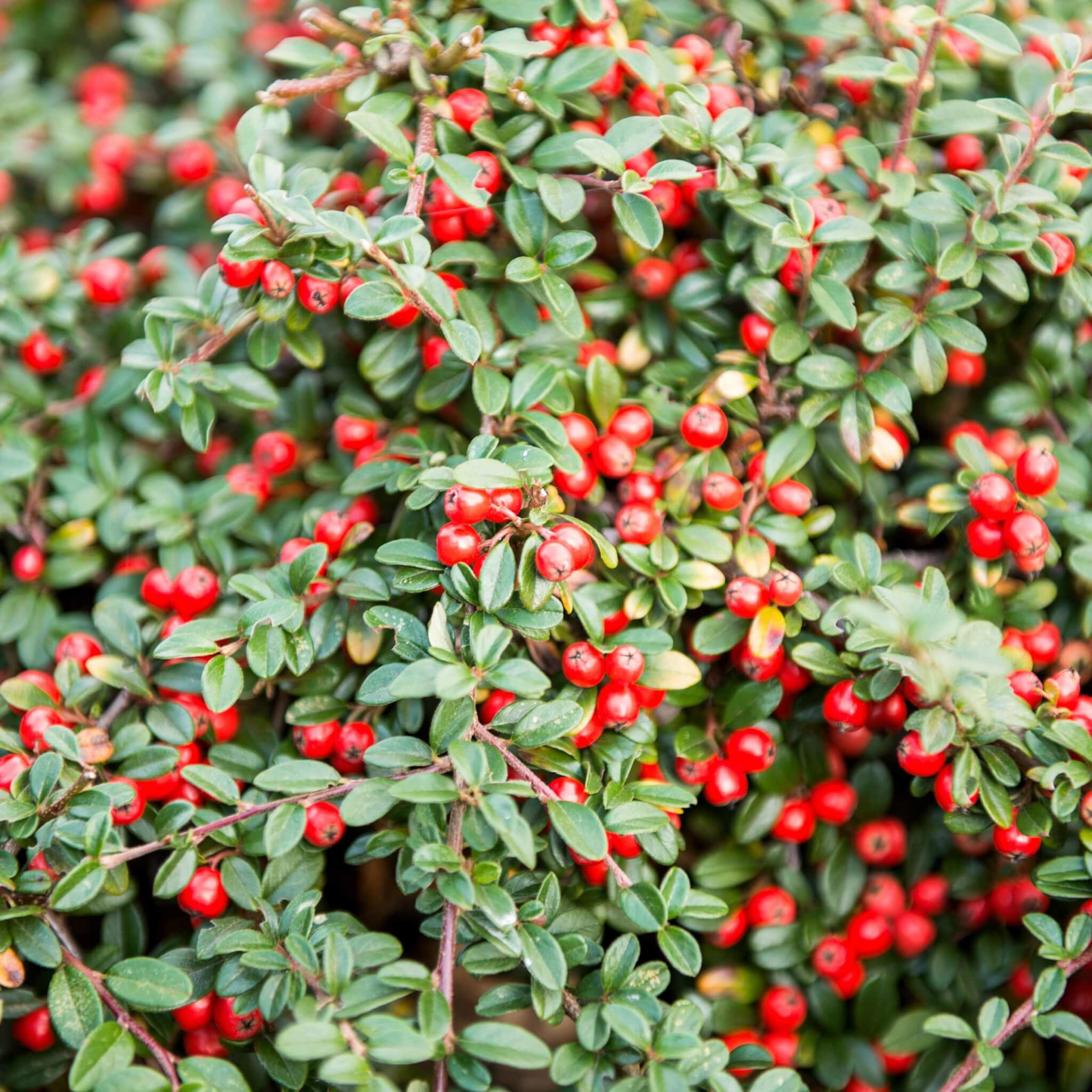
Cotoneaster is a versatile shrub group used for groundcover, hedging, and mass plantings thanks to its adaptability and four-season interest. Many forms produce small spring flowers followed by bright red or orange berries that persist into winter and attract birds. Foliage is typically small and glossy, turning red or bronze in fall. Depending on species and cultivar, cotoneaster may grow as a low spreading groundcover, arching shrub, or upright hedge. It is commonly used along slopes, retaining walls, and foundation beds where durable, low-maintenance coverage is needed.

Plant Characteristics
Genus
Cotoneaster
Species
Cotoneaster horizontalis, Cotoneaster dammeri, Cotoneaster lucidus
Cultivar
‘Coral Beauty’, ‘Tom Thumb’, ‘Emerald Beauty’
Family
Rosaceae
Plant Color
Green
Flower Color
White, pink
Bloom Time
Fall Color
Yellow, orange, burgundy, red
Height
1-12'
Width
3-10'
Water Use
Low-medium
Care Instructions

Cotoneaster performs best in full sun to partial sun and well-drained soil. It has low to medium water needs once established and tolerates drought conditions fairly well. Water regularly during establishment to promote root development. Pruning is generally minimal and done in early spring to shape or control size. Fall dieback cutback is not needed, as this is a woody shrub that maintains structure year-round. Winter protection is typically unnecessary in Rocky Mountain climates, though good drainage helps prevent winter damage.