Hydrangea

Hydrangea macrophylla, Hydrangea paniculata, Hydrangea arborescens, Hydrangea quercifolia

Cultivars: 'Annabelle', 'Limelight', 'Endless Summer'
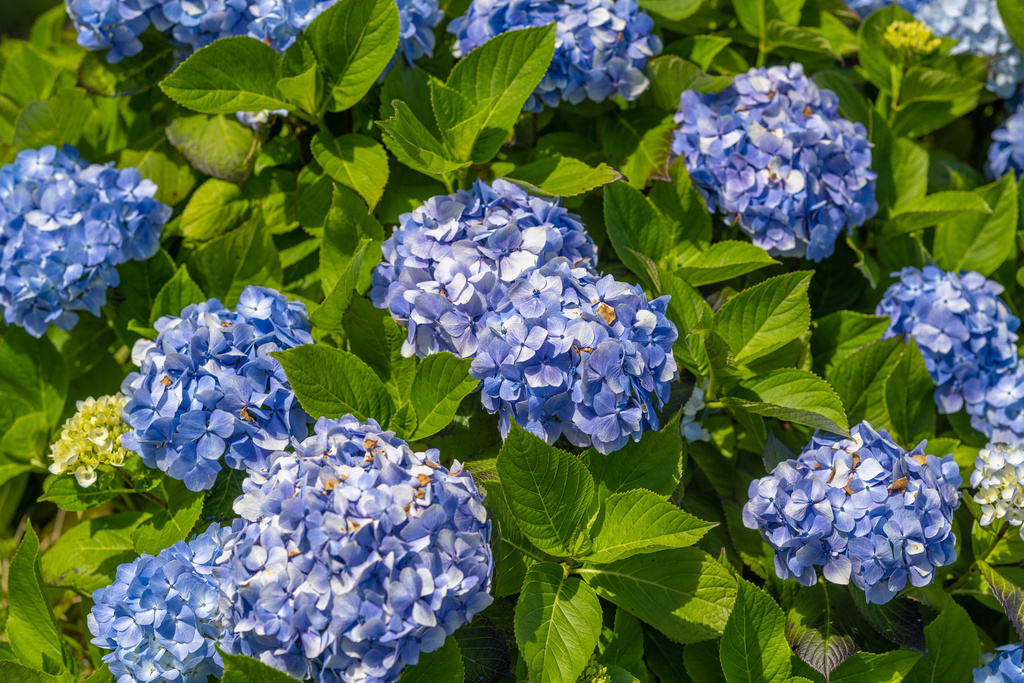
Hydrangeas are ornamental shrubs valued for their large, showy flower clusters and lush foliage. They provide strong seasonal color and work well in foundation plantings, mixed shrub beds, and accent locations near patios or entries. Flower form varies widely by species and cultivar, with selections available for colder climates that offer reliable bloom and manageable size. Pink and blue colors are directly tied to soil pH. The more acidic the soil is, the flowers become blue (below 5.5 pH). If the soil is alkaline rich, the flowers become pink (above 6.5 pH). Purple is indicative of 5.5-6.5 pH. Hydrangeas bring a softer, more traditional garden feel to the landscape and pair well with evergreens and perennials.

Plant Characteristics
Genus
Hydrangea
Species
Hydrangea macrophylla, Hydrangea paniculata, Hydrangea arborescens, Hydrangea quercifolia
Cultivar
‘Annabelle’, ‘Limelight’, ‘Endless Summer’
Family
Hydrangeaceae
Plant Characteristics
Plant Color
Green
Flower Color
Various
Bloom Time
Fall Color
Bronze-insignificant
Height
3-8'
Width
2-8'
Water Use
Medium-high
Care Instructions

Hydrangeas perform best in full sun to partial sun, with some afternoon protection in hotter sites. They have medium to high water needs and benefit from consistent moisture, especially during establishment and bloom season. Pruning depends on type, but most hardy landscape hydrangeas benefit from light pruning in early spring to remove dead wood and shape the plant. Fall dieback cutback is generally not recommended, leaving stems helps protect buds and structure through winter. Winter protection is advised for many hydrangeas in Rocky Mountain climates, especially in exposed sites, a layer of mulch and wind protection can help preserve buds and improve flowering.