Barberry

Berberis thunbergii, Berberis vulgaris

Cultivars: 'Crimson Pygmy', 'Rose Glow', 'Concorde'
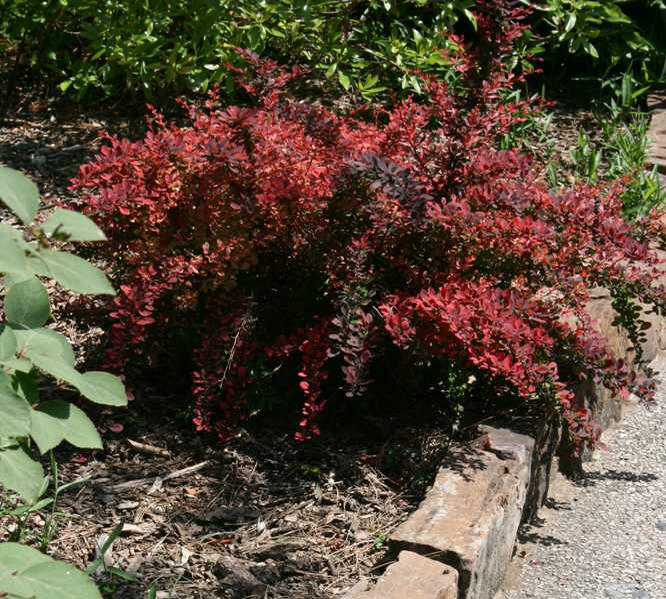
Barberry is a durable, widely used shrub valued for its dense branching, strong color options, and ability to hold shape in tough landscape conditions. It’s commonly used for foundation lines, mass plantings, and low hedges, because it creates a crisp, defined edge and provides season-long foliage color ranging from lime-gold to deep burgundy. Many selections also add small spring flowers and colorful berries, but its real landscape strength is reliability, it tolerates heat, wind, sun, and a wide range of soils. The thorny stems also make it useful as a barrier plant where you want a “do not enter” edge along fences, windows, or property lines.

Plant Characteristics
Genus
Berberis
Species
Berberis thunbergii, Berberis vulgaris
Cultivar
‘Crimson Pygmy’, ‘Rose Glow’, ‘Concorde’
Family
Berberidaceae
Plant Characteristics
Plant Color
Green, orange, red/purple
Flower Color
Yellow
Bloom Time
Fall Color
Orange, red/purple
Height
1-6'
Width
1-6'
Water Use
Low-medium
Care Instructions

Barberry grows best in full sun to partial sun and well-drained soil. It has low to medium water needs once established and is fairly drought tolerant, though it looks best with occasional deep watering during prolonged dry spells. Pruning is optional and depends on the intended look. For a natural form, prune lightly in late winter to remove deadwood and thin crowded stems. For hedging, shear after spring growth flush or lightly touch up mid-summer. Fall dieback cutback is not required, barberry is a woody shrub and should not be treated like an herbaceous perennial. Winter protection is not needed in most Rocky Mountain landscapes, and leaving the framework intact through winter preserves structure and reduces stress.