Raspberry

Rubus idaeus

Cultivars: 'Heritage', 'Caroline', 'Boyne'
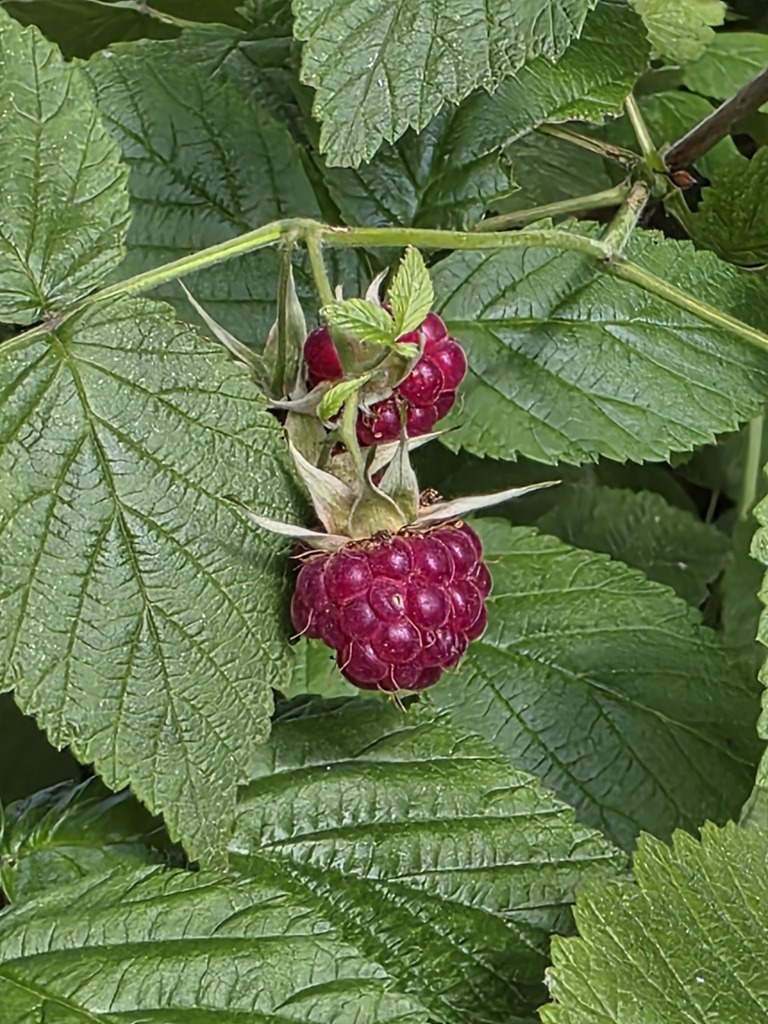
Raspberries are productive, cane-forming shrubs widely grown for their sweet fruit and suitability in home orchard and edible landscape settings. They produce upright to arching canes that leaf out in spring, followed by small white flowers and then clusters of red, yellow, or black berries depending on cultivar. In addition to fruit production, raspberry plantings can serve as informal hedges or garden edges. Their seasonal growth habit provides a lush green presence in summer and strong harvest value for homeowners interested in productive landscapes.

Plant Characteristics
Genus
Rubus
Species
Rubus idaeus
Cultivar
‘Heritage’, ‘Caroline’, ‘Boyne’
Family
Rosaceae
Plant Color
Green
Flower Color
White
Fall Color
Yellow
Height
1-6'
Width
1-6'
Water Use
Medium
Care Instructions

Raspberries perform best in full sun and well-drained soil with consistent moisture. They have medium water needs, particularly during flowering and fruit development, and benefit from regular deep watering. Good air circulation and spacing help reduce disease issues. Pruning depends on type, but most raspberries benefit from removing spent canes after fruiting and thinning new canes in early spring to maintain airflow and productivity. Trellising or support can improve structure and harvest ease. Winter protection is generally not required for hardy varieties in Rocky Mountain climates, though mulch around the base helps protect roots and conserve moisture.