Quince

Chaenomeles speciosa, Chaenomeles japonica, Chaenomeles × superba

Cultivars: 'Texas Scarlet', 'Double Take Scarlet', 'Jet Trail'
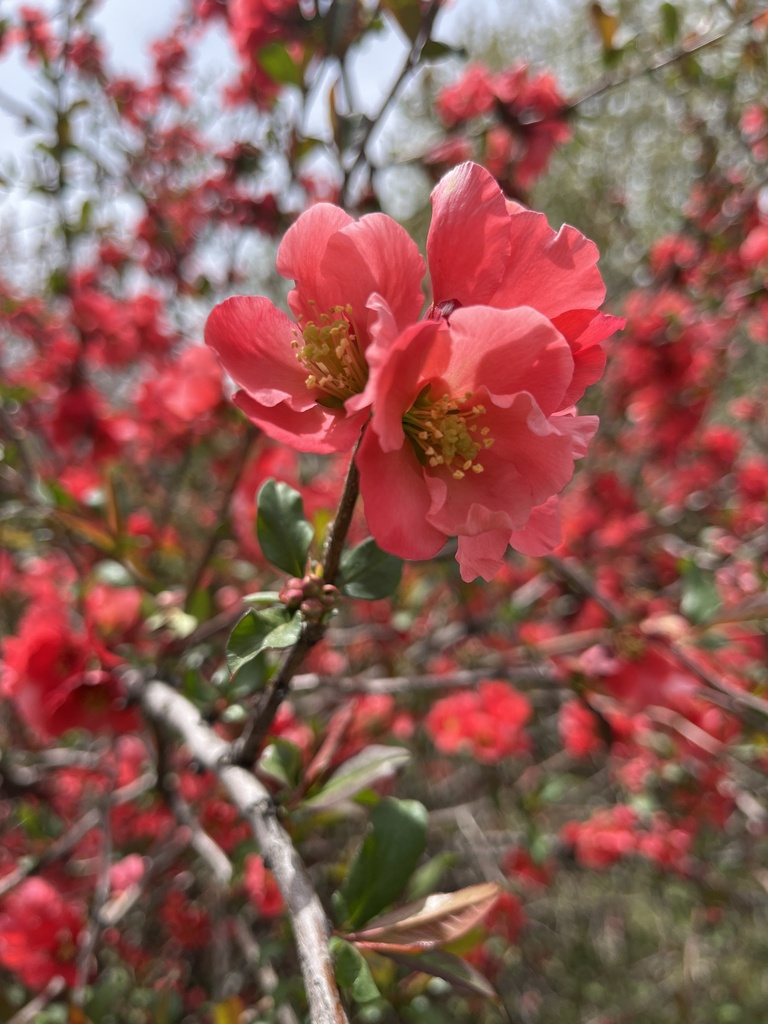
Flowering quince is an early-season standout, producing vivid red, orange, pink, or white blooms before the leaves fully emerge. It’s one of the first shrubs to announce spring, and the dense, twiggy structure gives it year-round presence in the landscape. Quince works well in mixed shrub borders, along fences, and as an informal hedge, especially where you want a durable, thorny barrier plant. Its branching habit also provides nesting habitat for birds, and some types produce small fruits that add seasonal interest. 

Plant Characteristics
Genus
Chaenomeles
Species
Chaenomeles speciosa, Chaenomeles japonica, Chaenomeles × superba
Cultivar
‘Texas Scarlet’, ‘Double Take Scarlet’, ‘Jet Trail’
Family
Rosaceae
Plant Characteristics
Plant Color
green
Flower Color
various
Bloom Time
Height
3-6'
Width
4-6'
Water Use
Low
Care Instructions

Quince performs best in full or partial sun and well-drained soil, though it tolerates a range of conditions. It has low to medium water needs once established, with best flowering and growth when it receives occasional deep watering in prolonged dry periods. The key pruning rule is timing: quince blooms on older wood, so prune right after flowering if shaping or thinning is needed. Remove a portion of the oldest stems at ground level to encourage new shoots and maintain bloom density. Fall dieback cutback is not appropriate, heavy fall or early-spring pruning will reduce flowering. Winter protection is generally unnecessary in Rocky Mountain landscapes, and leaving the shrub intact through winter helps protect buds.