


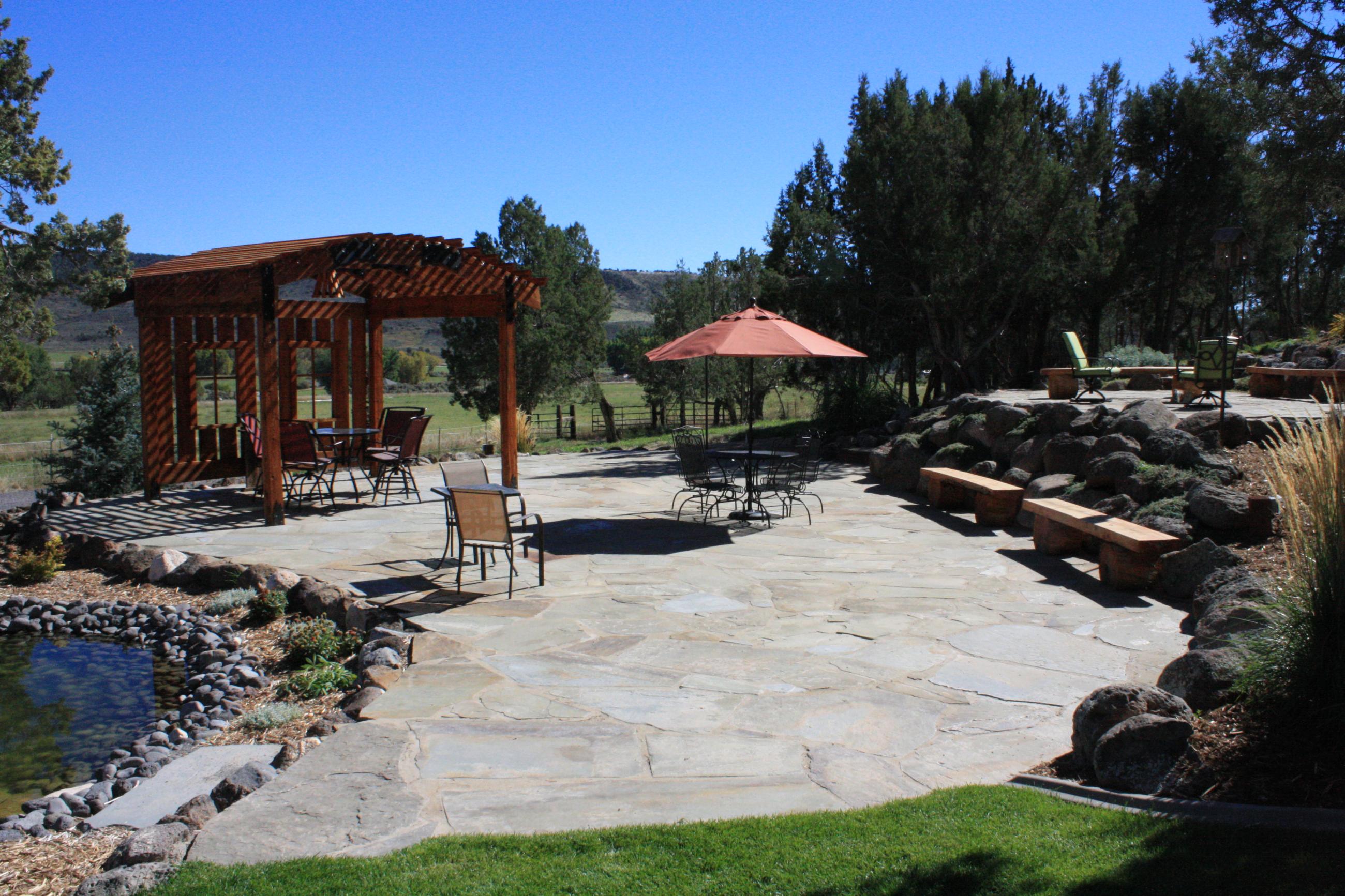
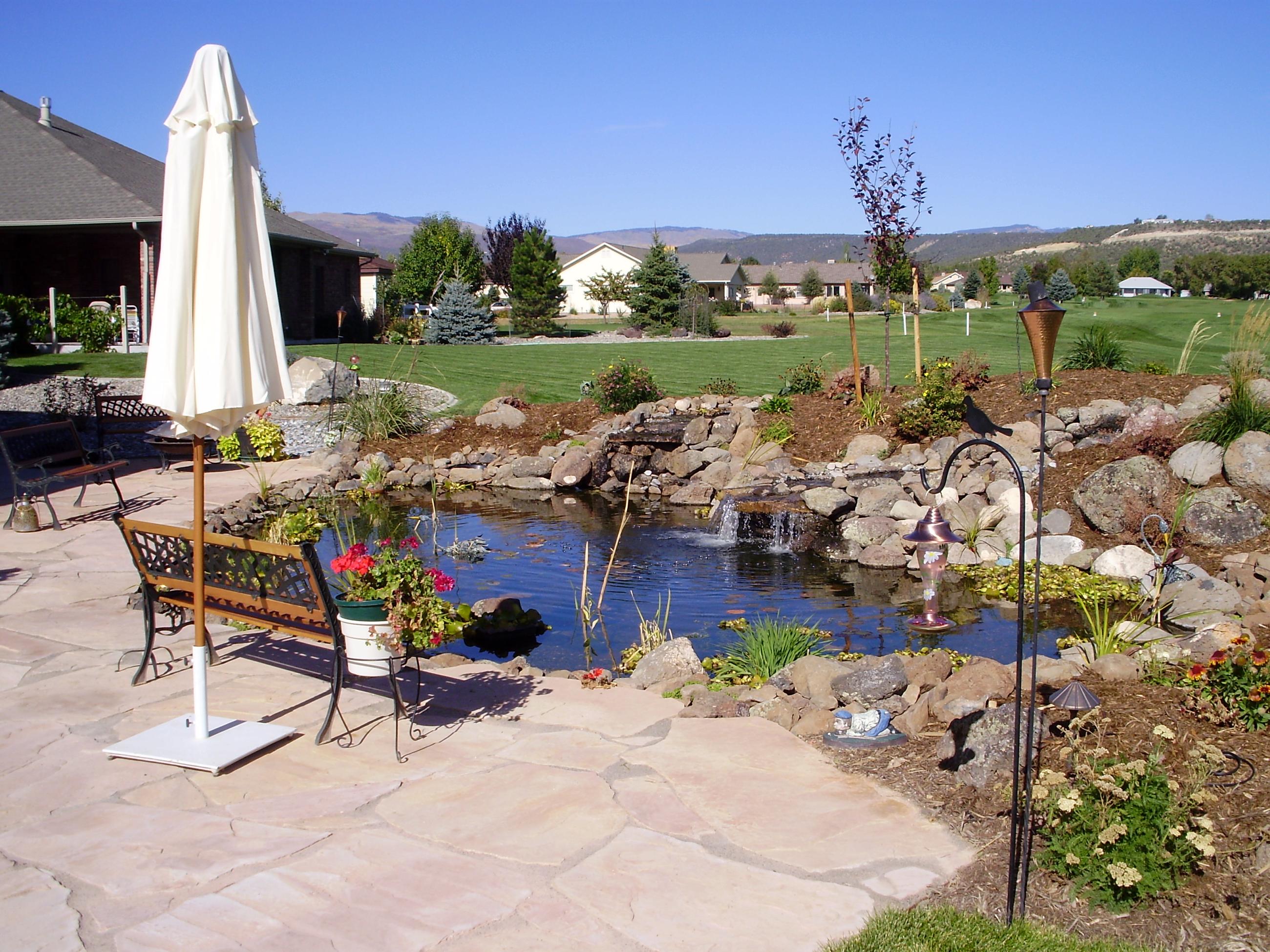
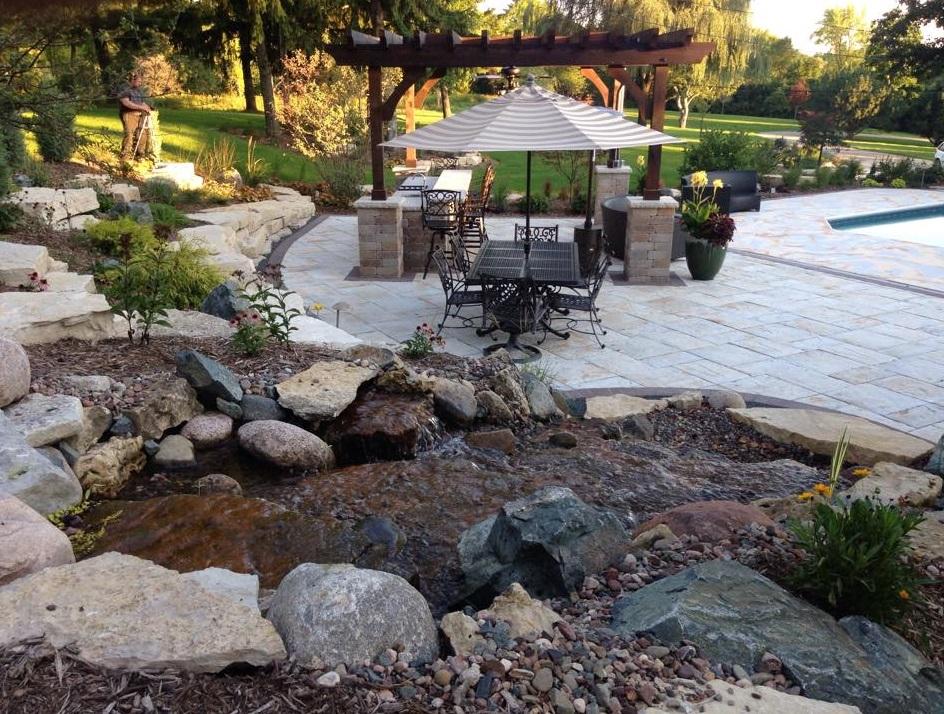
A patio is the floor of an outdoor room, and almost everything that goes wrong with one traces back to a decision made before anybody set a stone.
Size is the first. Most patios are built too small, and it is not a budget decision — it is that a rectangle chalked on the ground looks enormous and furnished looks cramped. A table that seats six, with chairs pulled out and room to walk behind them, needs more space than people expect. We lay it out on the ground with the actual furniture before anything is excavated, because moving a chalk line costs nothing and moving a patio costs everything.
Then what goes under it, which is the part that decides whether it is still flat in ten years. On this ground that means excavating to the right depth, compacting a base in lifts rather than all at once, and getting the drainage right so that water leaves rather than collects. Freeze and thaw is the test here — water that sits under a patio in November lifts it by March. A patio that heaves is almost never a problem with the surface. It is a problem with what was or was not done below it.
Then the material, and this is the part everybody starts with. Pavers come up and go back down, which matters if a utility ever has to be reached, and an individual damaged unit can be replaced. Stamped concrete is a single pour and costs less to cover a large area, and a crack in it is a repair rather than a swap. Natural stone sets by hand and looks like nothing else, and it takes longer. All three work here. Which one is right depends on the space, the house and what you want to spend, and that is a conversation rather than a catalog.
The things worth deciding at the same time, because they are far cheaper now than later: anything that needs a sleeve or a conduit run under the slab, where the lighting goes, and whether a future shade structure needs footings. Cutting into a finished patio to add one of those is the most avoidable expense in this trade.
We build the whole thing — layout, excavation, base, surface, and the planting and lighting that make it feel like part of the property rather than a slab behind it.