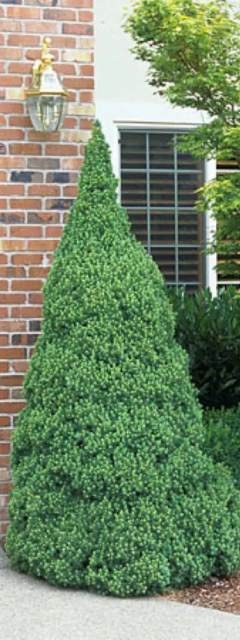
A slow-growing plant is the quiet opposite of everything a fast grower offers, and in most permanent positions it is the better buy.
Slow growth produces dense wood. Dense wood holds up in wind and wet snow, resists decay, and does not shed limbs. Slow growers also tend to live far longer, hold their shape without constant correction, and stay in proportion to the space they were planted in rather than outgrowing it in a decade.
The costs are real and worth being honest about. It costs more at the nursery, because it spent more years there before it was saleable — a slow-growing tree of any size represents more time than a fast one of the same size. And it asks for patience, which is the harder sell. A slow grower looks like a smaller plant for several years and then quietly becomes the best thing in the yard.
Where that trade works: anywhere permanent and anywhere near the house. A specimen tree, a foundation planting, a tree that is meant to be there in fifty years. Where it does not: a screen somebody needs now, or a position where something will have to come out anyway.
The pairing is often the right answer — a fast grower doing the job while a slow one establishes beside it, with the fast one removed when the slow one takes over. That is a design decision, not a compromise, and it should be made deliberately at install.